


Bulldozer Master: Crush & Mine
4.4804.00 Reviews
App Specs
- Version
- 11.2.0
- Updated On
- License
- Free
- Downloads
- 5,000,000+
- Developer
- Supercent, Inc.
- Categories
- Arcade
- Platform
- Android
Screenshots
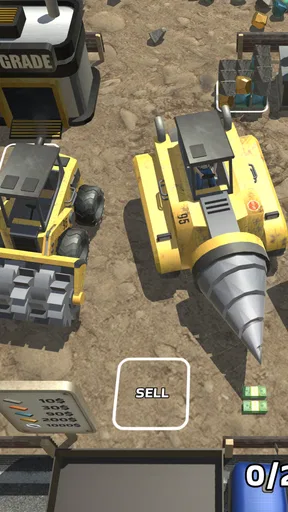
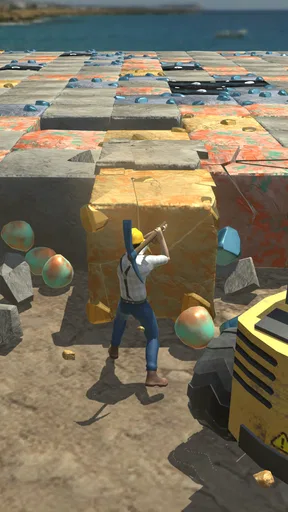
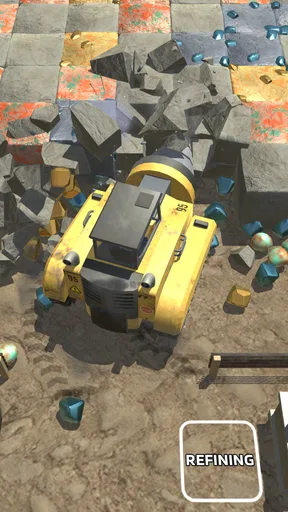
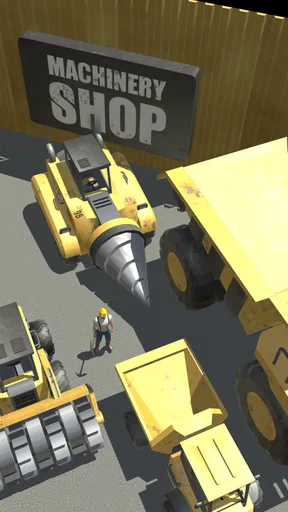
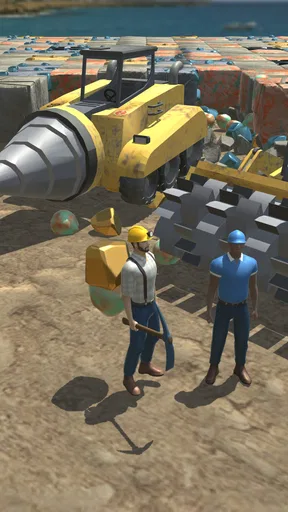
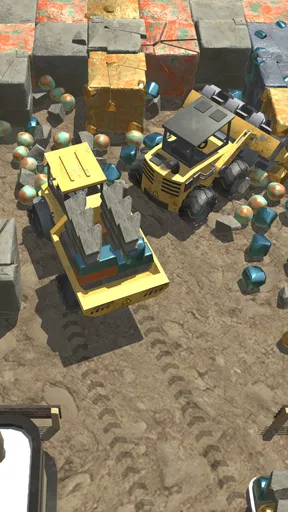
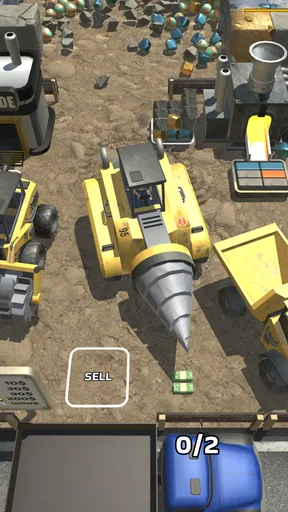
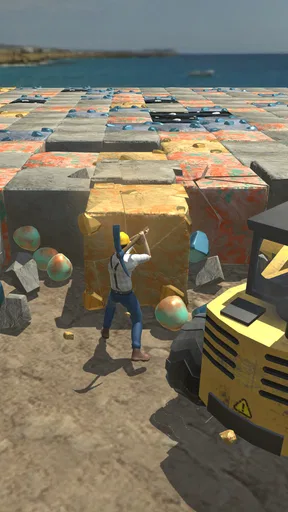
 Analysis by AppCompare
I went into Bulldozer Master: Crush & Mine expecting a quick arcade distraction, and that is exactly where it makes the most sense. This is a destruction simulator from Supercent, Inc. built around the simple pleasure of driving a bulldozer through obstacles, clearing space, and turning demolition into progress. The idea is easy to understand within moments, but the satisfying part comes from choosing what to remove first and keeping the machine moving instead of treating every object as an isolated target.
It is free to play and carries an Everyone age rating, so the presentation is approachable for younger players as well as adults looking for something uncomplicated. The game sits in the arcade category rather than trying to be a serious construction simulator. That distinction matters: I found it more enjoyable as a short, tactile activity than as a detailed vehicle-management experience. If you like watching a messy area become clear through direct action, there is a pleasant rhythm here.
How the basic demolition loop feels in practice
The usual session starts with a compact area that invites immediate action. I move the bulldozer toward the available material, make contact, and watch the environment give way as the machine does its job. There is no need to learn a complicated control scheme before getting started. The appeal is in the feedback: approach, push, clear, collect the result, and continue toward the next section.
That straightforward loop is also the reason the game works well in everyday situations. I can imagine opening it while waiting for an appointment, taking a short break between tasks, or playing for a few minutes when I do not want a story, a competitive match, or a long tutorial. The game asks for attention, but not the kind of sustained concentration required by a strategy title or a precision platformer.
The best way to approach each area is not simply to drive in the first direction that looks open. I get better results by looking briefly at the whole space and identifying the route that leaves the fewest awkward corners behind. Clearing a central passage first can make later movement easier, while attacking a large obstruction from a poor angle may force unnecessary repositioning. That small planning step gives the destruction a little more purpose than random pushing.
Mining adds another reason to pay attention to what is in front of the vehicle. The activity is not only about making a visible mess; it also connects clearing ground with gathering progress. I found that the most satisfying runs were the ones where I treated the terrain as a route rather than a collection of separate objects. A clean path lets the bulldozer keep its momentum, and momentum makes the whole session feel more efficient.
A repeatable routine for short sessions
My preferred routine is simple. I first scan for the widest obstruction, then clear a practical lane through it instead of immediately chasing every reachable piece. Once the main route is open, I circle back for anything that can be collected without a long detour. This keeps the vehicle from spending the entire session turning around in tight spaces.
Worth Reading Before You Choose

Flipboard Shows What News Apps Must Do Beyond the Feed

Switching to Android Auto Means Rethinking Your Driving Routine

Google Calendar Makes a Crowded Week Easier to Manage

Ludo King Makes the Most of the Minutes Between Plans

Baby Panda World Brings Quick Play to Modern Phones, but Its Game Library Feels Busy

ESPN’s Live Game View Makes Following Close Games Easier
That habit is especially useful when I am playing casually and want progress without overthinking. It also prevents a common frustration: reaching a promising area, only to discover that the bulldozer has been positioned awkwardly and must retrace its path. In a game based on movement and contact, good positioning is a quiet advantage.
I would not call this a deep simulation of excavation. The pleasure comes from accessible destruction, not from realistic soil behavior, equipment maintenance, or construction planning. Players who want authentic machinery controls may find the experience too light. For everyone else, the simplified approach keeps the focus on immediate action.
Settings and controls worth checking before settling in
Because this is a mobile arcade game, I recommend spending a moment checking the available options before beginning a longer session. The most important practical questions are how comfortable the control response feels, whether sound is suitable for the place where you are playing, and whether the visual presentation remains clear on your phone. These checks are more valuable than rushing straight into repeated levels.
I prefer controls that let me make small corrections without fighting the machine. Bulldozer movement can feel clumsy when a thumb input is too sensitive, particularly near narrow edges or collectible areas. If the game offers a choice in control behavior, I would favor the option that makes gradual steering predictable. A player who is comfortable with the controls will waste less time correcting direction and will notice the strategic side of the terrain more clearly.
Sound is another setting worth considering. Destruction effects can make each push feel more rewarding, but repeated sessions may be better with the volume lowered or muted, especially in a shared space. I often keep the game’s sound at a modest level and use it as confirmation that an action registered rather than as the main source of excitement.
It is also sensible to watch how the game behaves on your particular device before committing to a long play period. The minimum operating-system requirement is Android 6.0, which makes the game accessible to a broad range of Android phones. Even so, age and hardware differences can affect comfort, touch response, and battery use. A short test session tells you more than assuming every phone will deliver the same feel.
The current version is 10.0.0, so I would keep the installed build up to date when an update is available through the normal store process. Updates can matter for stability and control feel, but I would not treat the version number alone as a reason to expect a completely different game. The core attraction remains the same: direct bulldozer movement, destruction, and mining-oriented progress.
Small control habits that make a noticeable difference
I get fewer accidental reversals when I lift my thumb deliberately between movements instead of dragging continuously across the screen. That sounds minor, but it helps separate a planned turn from a correction made after the bulldozer has already gone too far. On smaller displays, keeping the thumb movements short also leaves more of the play area visible.
Another useful habit is to pause for a second after a large collision. I use that moment to check where the vehicle ended up and which route is now open. Immediately steering again can turn a successful push into an awkward angle. The game is fast enough to feel active, but it rewards a calm rhythm more than frantic input.
Players sharing a device with family members should also consider who will be using it before enabling or accepting purchases. The game is free to download and play, while its in-app purchases range from $0.49 to $99.99 per item. That is a wide span, so purchase controls and store authentication deserve attention on any phone used by children or multiple people.
Faster patterns for clearing ground and mining efficiently
Once the controls feel natural, the biggest improvement comes from reducing unnecessary travel. I try to think in connected paths: one push should ideally position the bulldozer for the next useful push. If I have to cross an empty area repeatedly, I treat that as a sign that I chose the wrong starting point or cleared objects in an inefficient order.
A practical pattern is to open a broad corridor first, then work along its edge. This gives the vehicle room to turn and makes it easier to return for remaining material. It is less flashy than attacking every visible target, but it usually produces a smoother run. The benefit is not only speed; it also reduces the number of moments where the bulldozer becomes trapped between obstacles.
When two possible routes appear, I choose the one that offers both immediate progress and a useful exit. A route that reaches a valuable-looking area but ends against a tight boundary may be slower overall than a slightly longer path with room to maneuver. This is one of the game’s understated trade-offs: the shortest visual distance is not always the quickest practical route.
I also avoid chasing small leftover pieces while the main path is still blocked. Those pieces are tempting because they are easy to reach, but collecting them too early can break the flow of the run. My preferred order is main obstruction, open route, nearby mining opportunity, then cleanup. That sequence keeps the bulldozer moving forward instead of bouncing between unfinished tasks.
Where the game works especially well
The game is a good fit for players who enjoy compact goals and visible progress. Someone who finds satisfaction in tidying a cluttered space may appreciate the transformation from blocked terrain to an open area. It can also suit younger players who want a vehicle game without complicated rules, provided an adult manages purchases and the device’s normal controls.
For an adult, the strongest use case is a low-pressure break. I would choose it over a competitive arcade game when I want to relax rather than prove anything. There is no need to memorize a large system before enjoying the first session, and the destruction theme gives each action an immediate visual payoff.
Compared with a conventional racing game, it is slower and more deliberate. Compared with a physics-heavy destruction game, it is more guided and less concerned with realistic chaos. Compared with a construction-management title, it removes planning layers such as budgets, staffing, and long-term development. That narrower focus is a strength when I want instant interaction, but a weakness if I am looking for strategic depth or simulation detail.
I would skip it if your ideal arcade game depends on high-score competition, elaborate combos, or increasingly demanding reflex tests. I would also look elsewhere if you want a sandbox where every object behaves unpredictably. This experience is better understood as a structured demolition pastime: the fun comes from the dependable relationship between vehicle, obstacle, and progress.
Advanced limits and the trade-offs behind the simplicity
The same accessibility that makes the first session inviting can limit long-term variety for experienced players. Once the basic movement pattern becomes familiar, the challenge depends heavily on how interesting the areas remain and how much the game asks you to optimize your route. Players who need constant mechanical surprises may eventually find the loop repetitive.
There is also a difference between feeling productive and making a meaningful strategic decision. Clearing a large obstruction looks and feels rewarding, but not every action carries the same weight. I found that the game is most engaging when I impose a small goal on myself, such as finishing a section with minimal backtracking or opening the cleanest route first. Without that extra intention, the activity can become passive.
The purchase structure is another consideration. Since the game is free, it is easy to try without making a commitment. However, the presence of items priced from $0.49 to $99.99 means that players should decide in advance whether they are comfortable spending money on optional progress or convenience. I prefer treating purchases as unnecessary extras and judging the game by what the free experience offers. Families should be particularly careful because an arcade game’s simple presentation can make spending feel less serious than it is.
The Everyone rating makes the game broadly approachable, but age suitability does not automatically mean every child should play without supervision. The practical issue is not mature content; it is managing screen time and store access. For a younger player, I would set clear boundaries around sessions and make sure purchases require approval.
Another limit is that the game is designed for touchscreens, so the physical feel depends on the phone. A larger display may make route planning easier, while a smaller one can make precise steering more demanding. If your hand covers much of the play area during movement, the game may feel less comfortable than it does in promotional screenshots or on another device. That is not a flaw unique to this title, but it matters more in a game where positioning is the main skill.
How experienced players can keep sessions purposeful
My best advanced habit is to use each new area as a routing exercise rather than simply a demolition checklist. Before moving, I identify an entry point, a likely exit, and the material worth collecting along the way. This creates a repeatable decision process without pretending the game has hidden systems that are not part of its straightforward design.
I also separate “progress pushes” from “cleanup pushes.” A progress push opens access to the next useful space; a cleanup push removes leftovers after the route is safe. Keeping those roles distinct helps me avoid spending time on low-value movement while the main path is still closed. It is a small mental shortcut, but it makes casual play feel more deliberate.
When I am tired, I use the opposite approach and stop optimizing. I choose the most obvious open route and enjoy the visual clearing. That is important because not every session needs to become a challenge run. The game’s value is partly its ability to support both moods: relaxed destruction when I want to switch off, and light route planning when I want a little more involvement.
Players should also know when to stop. If the bulldozer loop no longer feels satisfying and you are continuing only because the next area might become more complex, a different arcade game may be a better use of your time. The title does not need to replace every other game on your phone. It works best as a focused option for a particular kind of short, tactile entertainment.
My verdict after settling into the bulldozer routine
Bulldozer Master: Crush & Mine succeeds because it understands the appeal of a clear action: drive forward, break through, gather progress, and leave the area more open than you found it. Supercent, Inc. keeps the experience approachable, and the arcade format makes it easy to start without a long explanation. I enjoyed it most when I played with a simple route in mind and allowed the destruction effects to provide the satisfaction.
The game’s 4.6 average from around 8K ratings suggests that its uncomplicated style has connected with a substantial audience, and it has passed 100K installs. Those figures do not change the experience itself, but they do place it among the more established choices for someone browsing free arcade games rather than an obscure experiment.
My recommendation is clear but specific: try it if you want a free, easy-to-learn demolition game for short sessions, especially if you enjoy turning cluttered spaces into open paths. Check the controls, keep purchases protected, and use route planning to get more from the simple loop. I would not recommend it to someone seeking realistic bulldozer operation, deep progression, or intense competitive challenge.
For me, the winning quality is its low-pressure sense of progress. I can play casually, improve my movement through a few practical habits, and stop without feeling that I have abandoned a complicated campaign. It is at its best when you want satisfying destruction with just enough route choice to keep your hands and attention involved.
Pros
- Simple controls make it easy to start playing immediately.
- Satisfying destruction effects make clearing obstacles feel rewarding.
- Short levels fit well into quick gaming sessions.
- Upgrades provide a clear sense of progress over time.
- Offline play is convenient when you have no internet connection.
Cons
- Gameplay can become repetitive after several similar levels.
- Some upgrades may require considerable grinding to unlock.
- Frequent ads can interrupt the flow between levels.
- The challenge may feel too easy for experienced players.
- Limited customization reduces long-term variety.
FAQs for Bulldozer Master: Crush & Mine
What is Bulldozer Master: Crush & Mine about?
Bulldozer Master: Crush & Mine is a casual driving and mining game centered on operating a powerful bulldozer. You clear obstacles, crush objects, collect valuable materials, and improve your vehicle as you progress. The gameplay is designed to be easy to understand, with short levels and satisfying destruction, making it suitable for players who enjoy simple controls, incremental upgrades, and relaxing progression rather than complex simulation mechanics.
How do you play Bulldozer Master: Crush & Mine?
The main objective is to guide your bulldozer through each area, break or push obstacles out of the way, and gather resources before completing the stage. Controls are generally straightforward and adapted for touchscreens, so new players can begin quickly. As you advance, you may need to manage movement more carefully, choose efficient routes, and use vehicle improvements to handle tougher materials and larger obstacles.
Does Bulldozer Master: Crush & Mine work offline?
The basic gameplay may be accessible without a constant internet connection, which is convenient for playing during travel or when mobile data is unavailable. However, certain features can still depend on connectivity, including advertisements, reward systems, cloud-related services, updates, or promotional content. For the most reliable experience, launch the game online at least occasionally and check its current store description for the developer’s latest offline-play information.
Is Bulldozer Master: Crush & Mine free to download?
Bulldozer Master: Crush & Mine is typically offered as a free download, allowing you to try the main gameplay without paying upfront. Like many free mobile games, it may include advertisements and optional in-app purchases for currency, boosts, upgrades, or other conveniences. You can usually make progress without spending money, although purchases may reduce waiting or speed up vehicle development for players who prefer faster progression.
Is Bulldozer Master: Crush & Mine suitable for children?
The game’s simple controls, colorful presentation, and non-realistic destruction make it approachable for younger players, but parents should still review the age rating and store listing before installation. Advertising and optional purchases are important considerations, especially on shared devices. If children will play, enabling parental controls and restricting unauthorized payments is recommended, since the exact content, advertisements, and purchase options can change through updates.


